Standalone business / Healthcare
TrialLayer
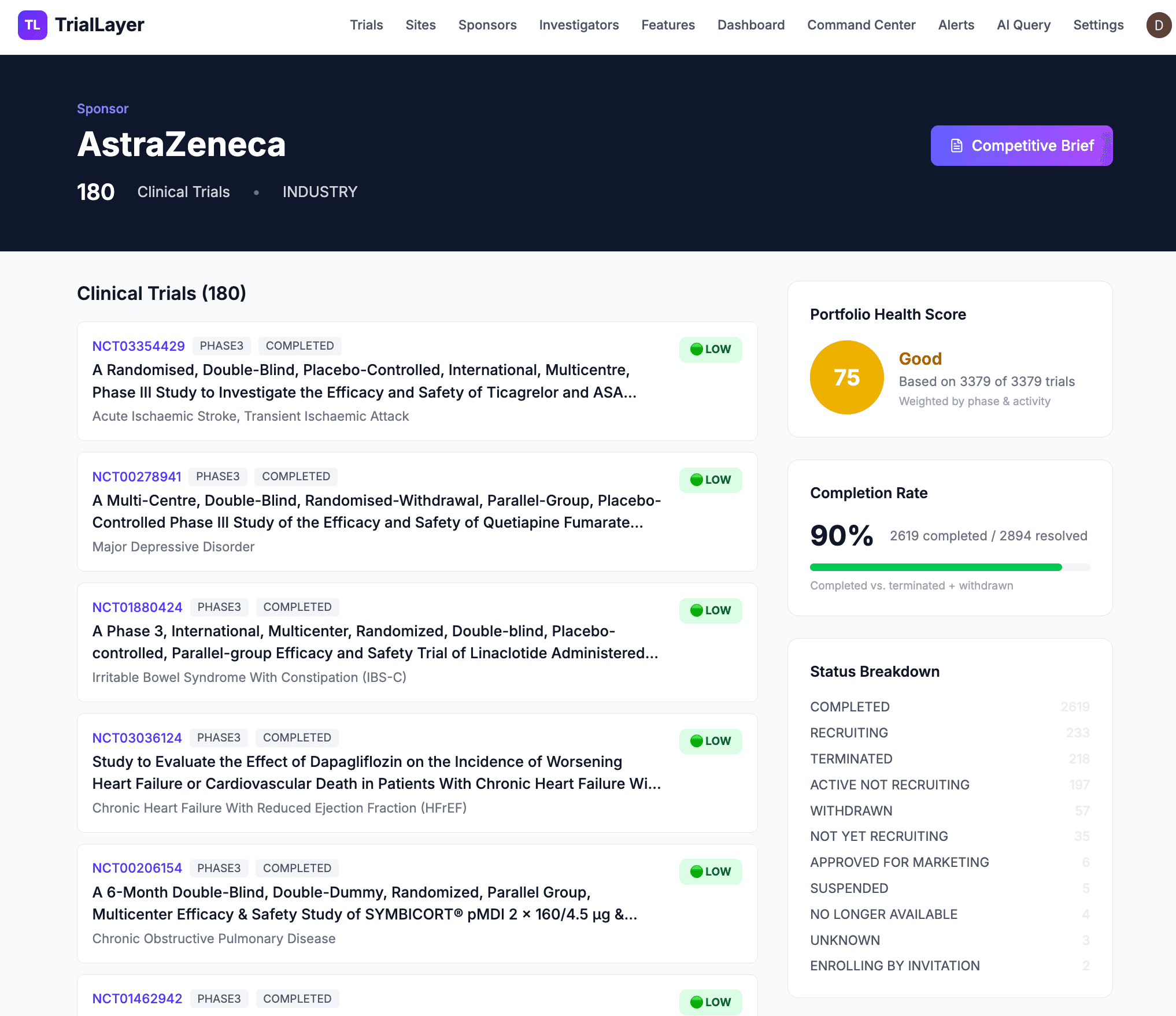
A production clinical-trial intelligence platform with 500k+ trials, proprietary Trial Health Scores, authenticated dashboards, billing, AI analysis, and background data infrastructure.
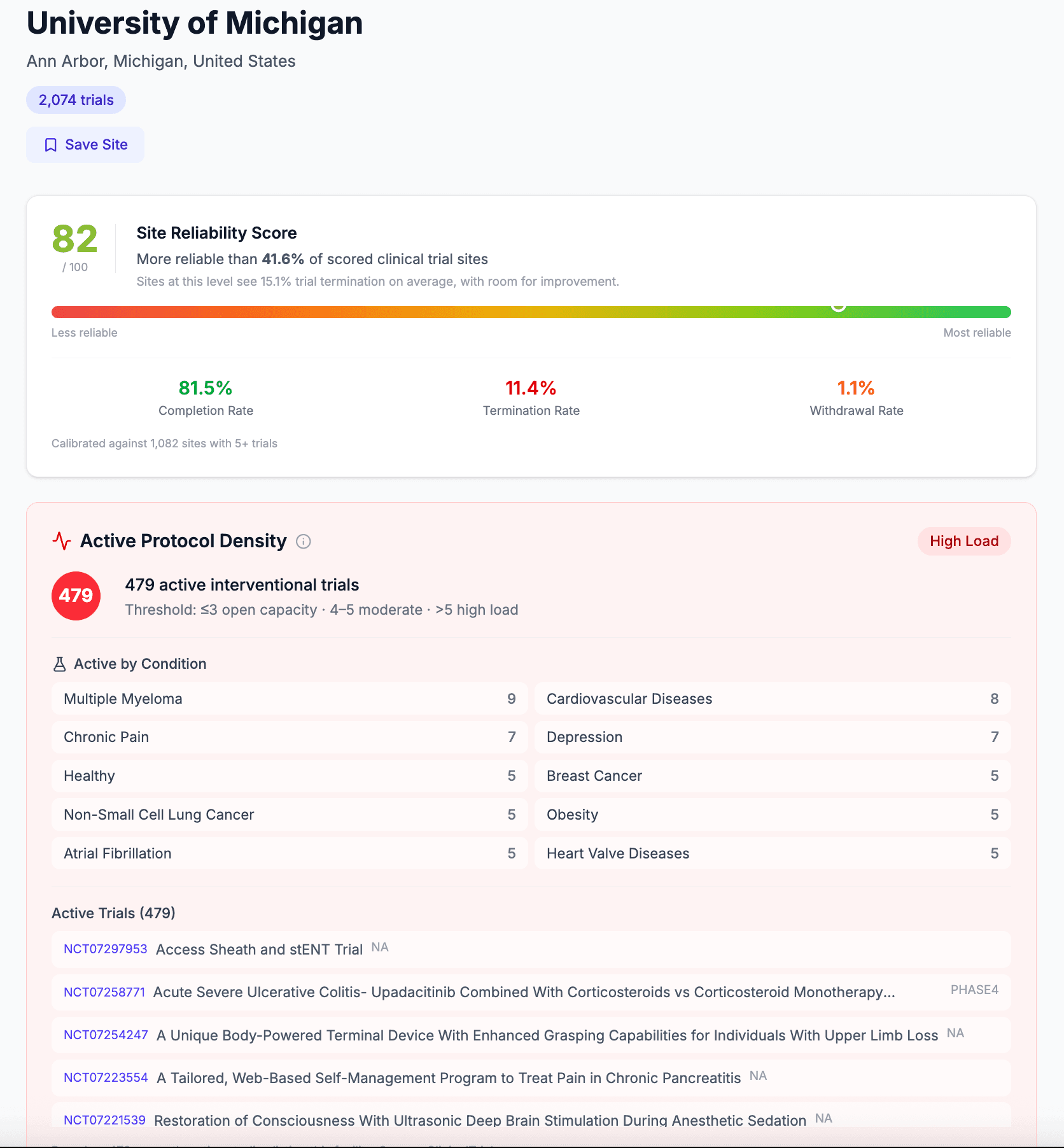
A live clinical-trial intelligence platform that turns public trial data into decision-ready analysis across trial likelihood of success, site overload, sponsor portfolios, investigator history, protocol density, alerts, reports, and AI-assisted research workflows.
Status
Live
Timeline
Live clinical-trial intelligence platform
Domain
Healthcare
Why
Standalone business
Stack
Languages, services, data sources, and operating pieces behind the build.
Code Proof
What The Build Actually Contains
LOC
52k+
Source files
318
Migrations
18
Auth
Clerk
Billing
Stripe
AI
Anthropic
Sync
Cron/VPS
Product proof
Implementation
Code Behind The Surface
Nightly Trial Sync
tsThe platform is not a static data wrapper. It depends on scheduled ingestion, normalization, snapshots, and recalculated scores.
export const ctgovSync = task({
  id: "ctgov-full-sync",
  cron: "0 7 * * *",
  run: async () => {
    const trials = await fetchClinicalTrialsGov();
    const normalized = trials.map(parseTrialRecord);

    await upsertTrials(normalized);
    await createHistoricalSnapshots(normalized);
    await recalculateTrialHealthScores(normalized);
  },
});
Billing And Access Control
tsClerk, Stripe, usage limits, and protected routes turn the intelligence layer into an actual SaaS product.
const { userId } = await auth();
if (!userId) redirect("/sign-in");

const access = await getUserAccess(userId);
if (!access.canUseAiQuery) {
  return NextResponse.json(
    { error: "AI queries require a paid subscription" },
    { status: 402 },
  );
}
Anthropic Analysis
tsAI is used where it belongs: summarizing, querying, briefing, and explaining dense clinical context.
const response = await anthropic.messages.create({
  model: AI_MODEL,
  max_tokens: MAX_TOKENS_SYNTHESIZE,
  messages: [
    {
      role: "user",
      content: buildClinicalIntelligencePrompt(context),
    },
  ],
});
Project Logic
Why This Exists
The useful part is the path: what was broken, what I built, and where the leverage showed up.
Mission
Can public clinical-trial data show which trials, sites, sponsors, and investigators are positioned for success or overload?
Clinical trial data is public, but the signal is buried across protocols, statuses, sponsors, investigators, sites, conditions, enrollment patterns, and trial outcomes. The market needs an intelligence layer for health, risk, reliability, overload, and likely success.
Build
What Had To Work
I built the full product and operating layer: a Next.js application with Clerk OAuth, Stripe subscriptions and webhooks, gated dashboards, watchlists, alerts, reports, Anthropic-powered analysis, proprietary scoring, Drizzle/Postgres schema work, Python and TypeScript import jobs, nightly sync infrastructure, and a separate VPS-backed data pipeline for large clinical datasets.
Why It Matters
500k+ trials / THS
Makes trial, sponsor, site, and investigator risk visible before teams commit time, capital, or protocol strategy.
Hard Parts
The Dataset Is Huge
ClinicalTrials.gov and AACT are not small lookup tables. The build needed import scripts, migrations, snapshots, sync logs, and background jobs so hundreds of thousands of trials could stay usable.
The Product Has A Real Business Layer
TrialLayer includes Clerk OAuth, protected routes, Stripe checkout, subscription state, billing portal access, usage gates, and webhook handling. It is built like a SaaS product, not a demo.
AI Needed Guardrails And Context
Anthropic analysis sits on top of structured clinical context: trial records, sponsor history, site data, external signals, and generated briefs. The point is judgment, not chatbot theater.
Decisions
Proof
Live artifact with inspectable product surface, implementation details, and proof points.
LOC: 52k+
Source files: 318
Migrations: 18
500k+ public clinical trials
Proprietary Trial Health Score (THS)
Clerk OAuth and protected app routes
Tell Me About Your Project
Bring Me The Bottleneck.
I’ll Build The Answer.
Tell me what people are trying to do, where the current path breaks, and what kind of useful answer should exist.
Market Gap
Demand exists, but the answer is missing.
Workflow Drag
The work is still too manual, slow, or scattered.
Product Wedge
A small surface could prove the larger opportunity.